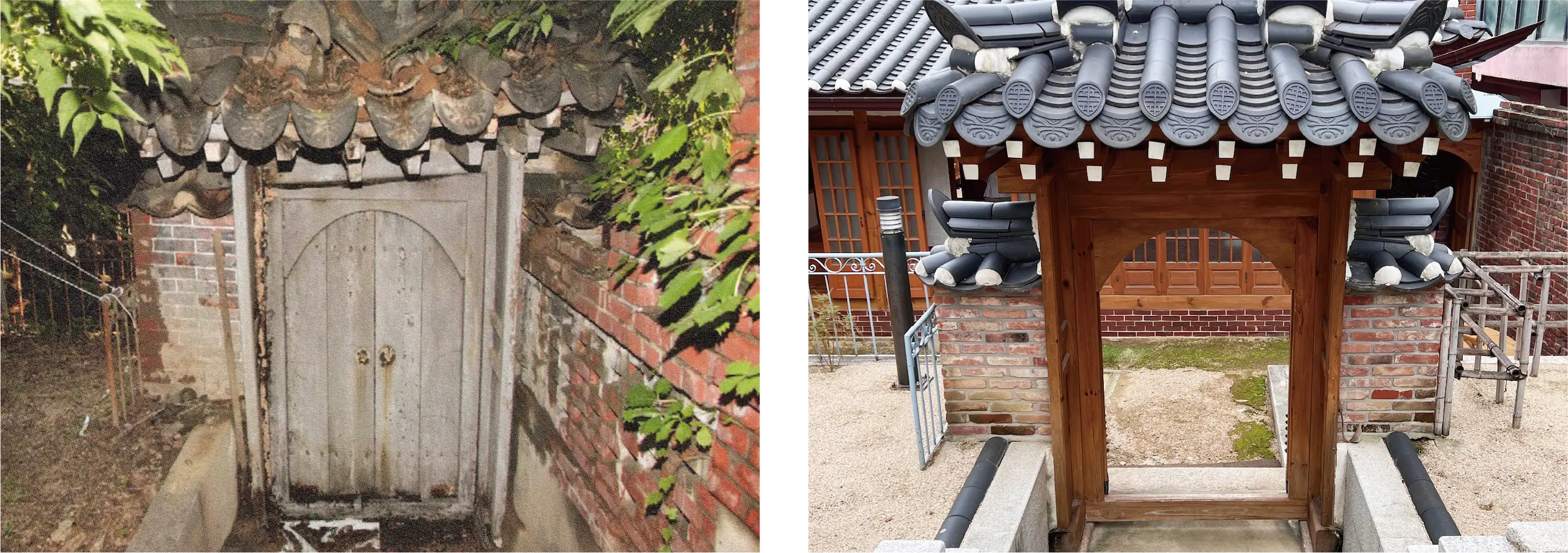
Ilgakmun
: It is a small traditional gate made with two supporting pillars and a simple tiled roof. Because of its modest scale, it was commonly used to separate the main living quarters from the back garden or secondary spaces within a house.
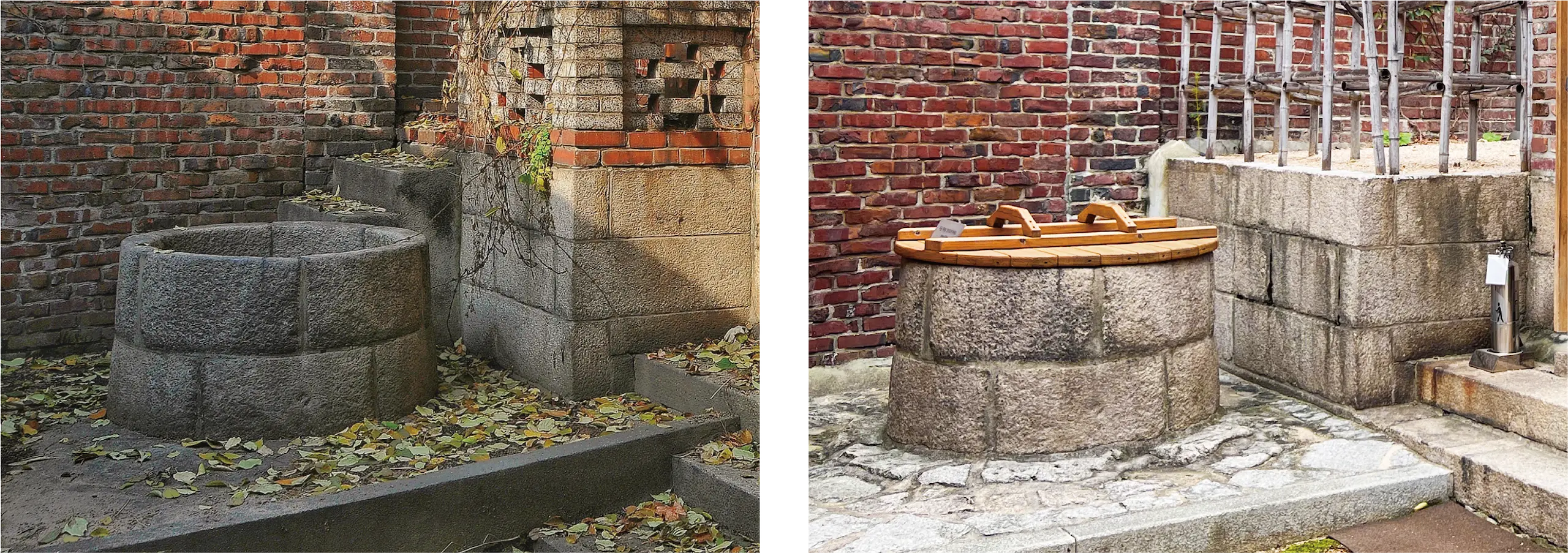
Well
: The circular well is made up of rectangular stones and is located between the Ilgakmun and the side door that connects the Anchae to the back garden.
This circular stone well, built with carefully stacked foundation stones, is located between the Ilgakmun and the side gate leading from the Anchae to the rear garden. Since wells were traditionally placed near the center of a house compound, its location helps researchers estimate the original size of the property before the land was divided.
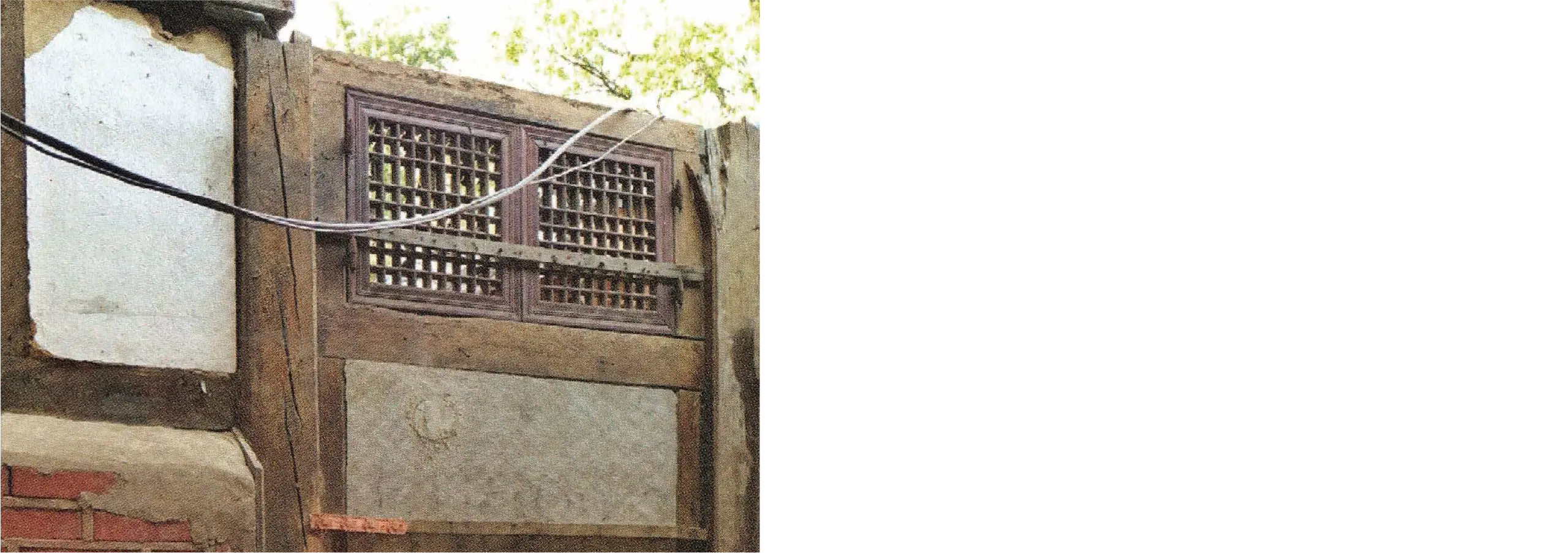
Wooden Structural Remains
: These wooden structural remains were discovered during the restoration of the house. In addition to the main and rear gates, they are believed to have functioned as another entrance to the property, suggesting that the house and its grounds were once larger than they are today.
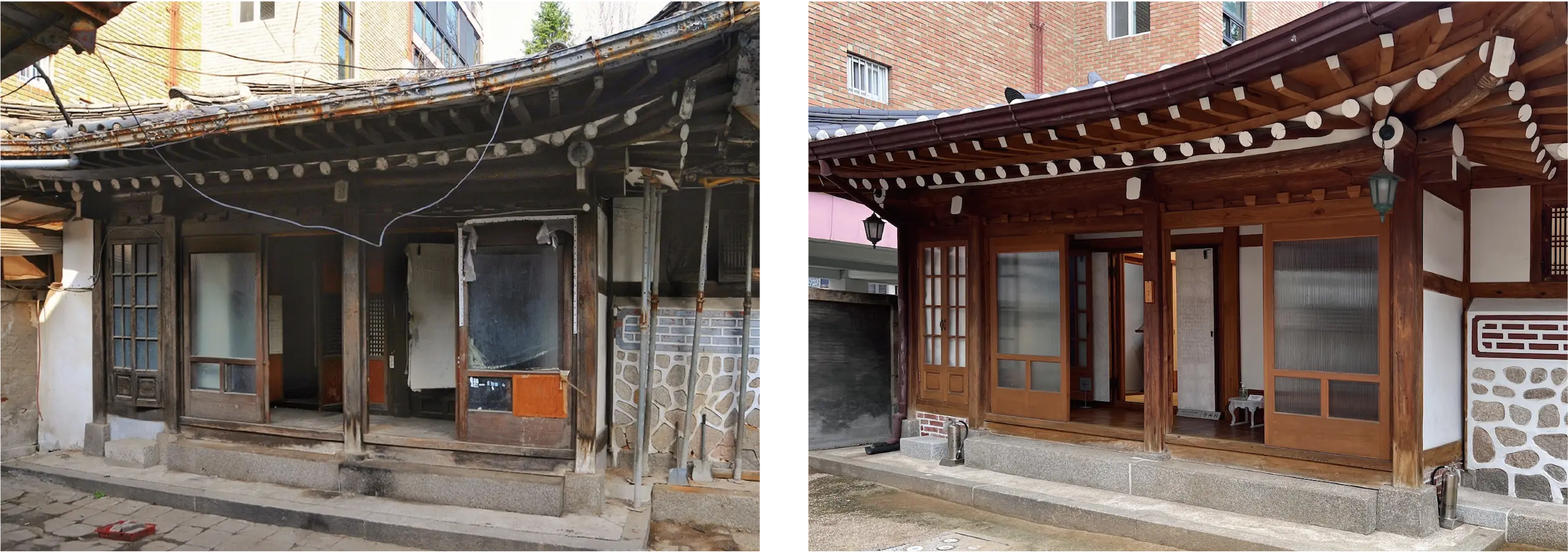
Sarangchae
: During renovation work in 2013, a temporary one-story structure with a basement, built with cement blocks between the Anchae and the Sarangchae, was removed. The area has since been restored to reflect the house’s original layout.
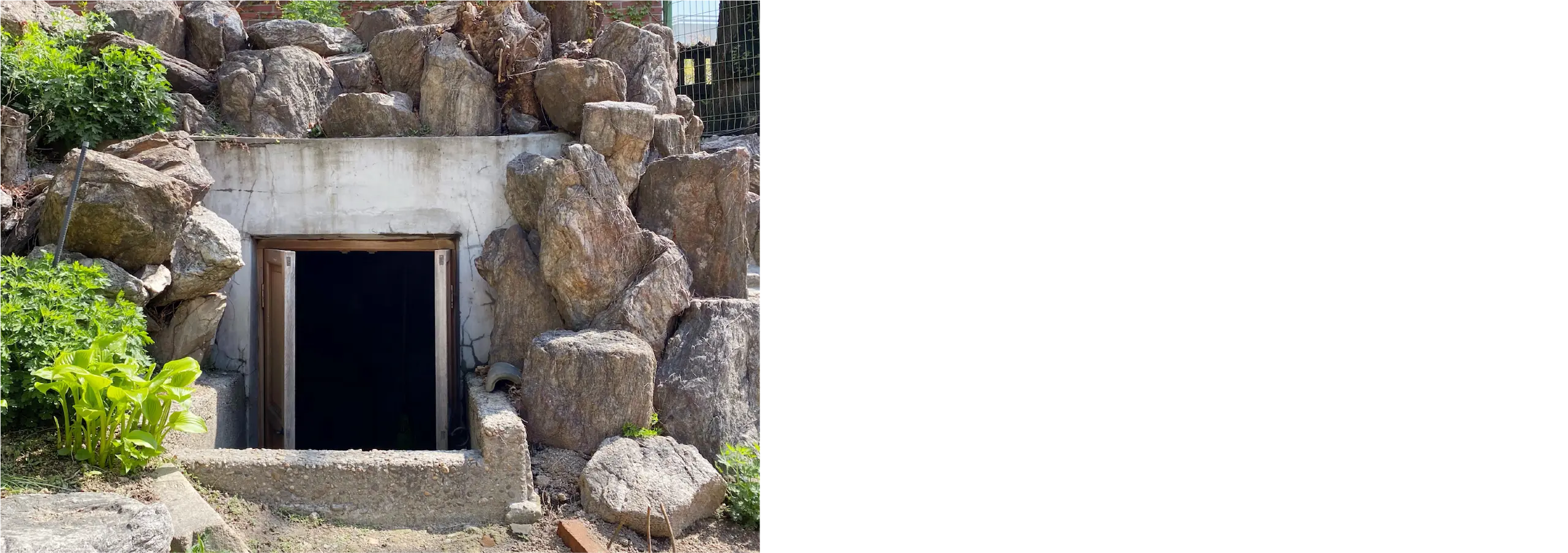
Bing-go
: Bing-go was an underground storage space used for keeping ice, built by taking advantage of the gradually rising terrain toward the rear garden. Today, its remaining form resembles an air-raid shelter.
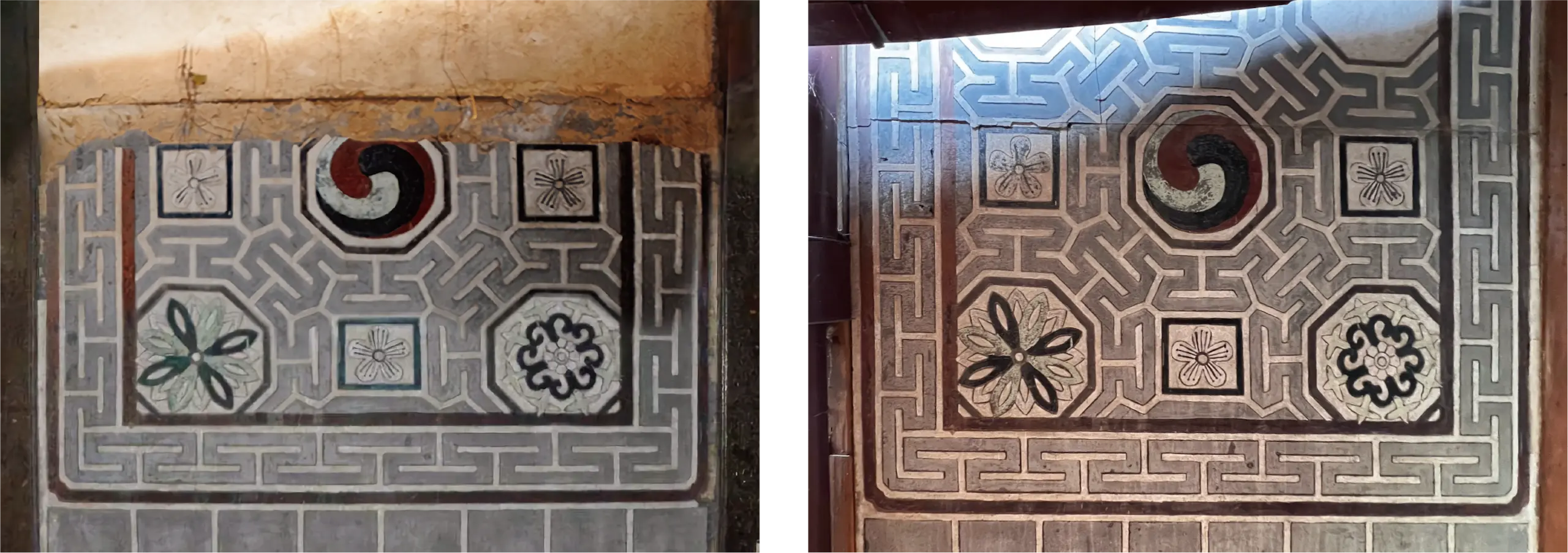
Flower wall
: A flower wall is a decorative brick wall adorned with colorful patterns and symbolic motifs, traditionally found in palaces and upper-class homes. The wall surrounding the Byeolchae features designs such as the taegeuk symbol, pear blossoms, and lotus flowers. At the time of restoration, only the lower section survived in damaged condition, and the upper decorative section was reproduced in 2013 based on historical records and remaining traces.
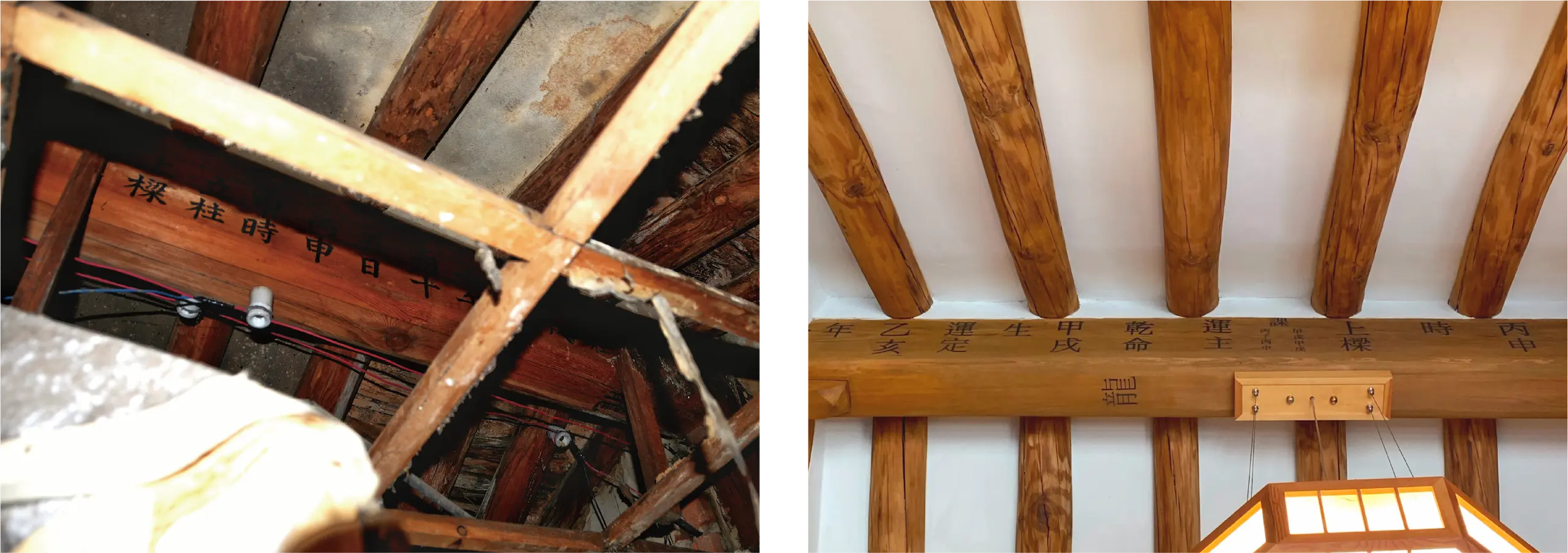
Sangryangmun
: The records of the house, including when it was first built and when it was repaired, are written on the beam. Through the Sangryangmun of the Anchae, it is possible to identify the construction date of the house. The turtle(龜) and dragon(龍), regarded as gods of water, are written on the beam in the hope of protecting the house from fire.
Daechung
: During the modern period, glass doors were installed along the wooden veranda, allowing the space to be enclosed and used as an interior room. Based on the side doors beside the Anbang and Geonneonbang, as well as the central pillar in the Daechung, researchers believe the space was originally divided into an open wooden hall and an outer veranda.
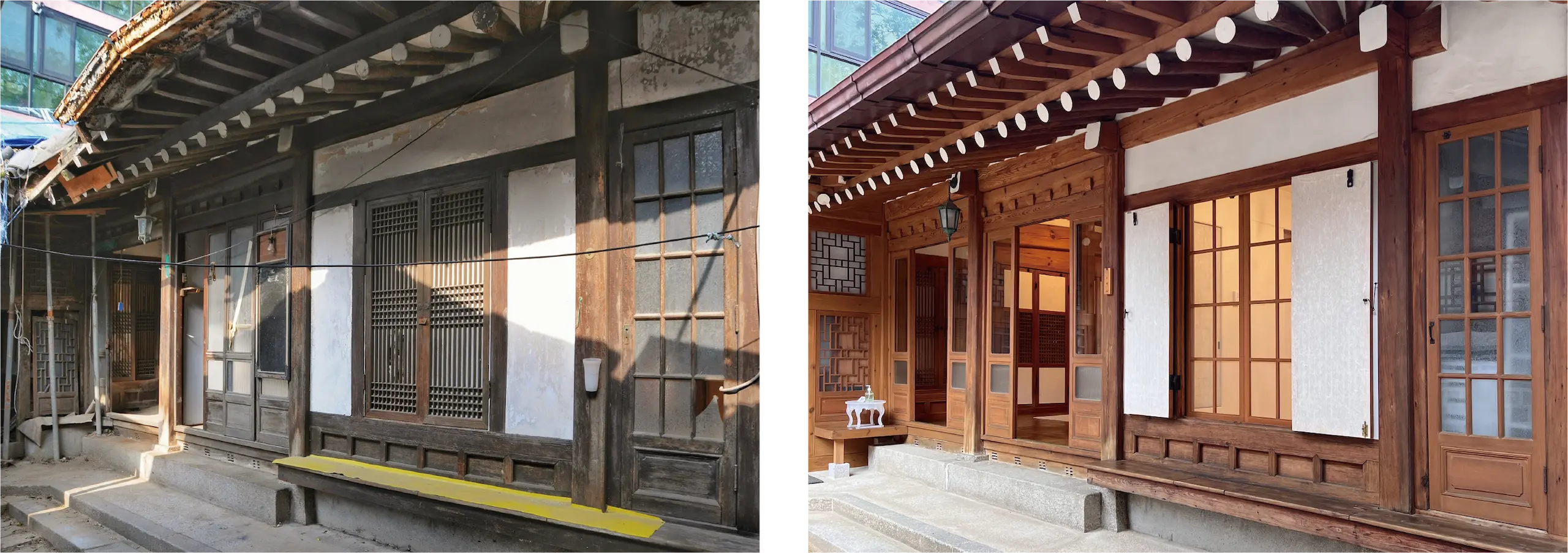
Yeomopan & Punghyeol
: Yeomopan is a wooden panel placed between the stepping stones and the raised wooden floor, often decorated with openings in the shape of the Eight Trigrams, the same symbols seen on the Korean national flag. These openings, called Punghyeol, allow air to circulate beneath the floor during summer while helping retain warmth in winter.